

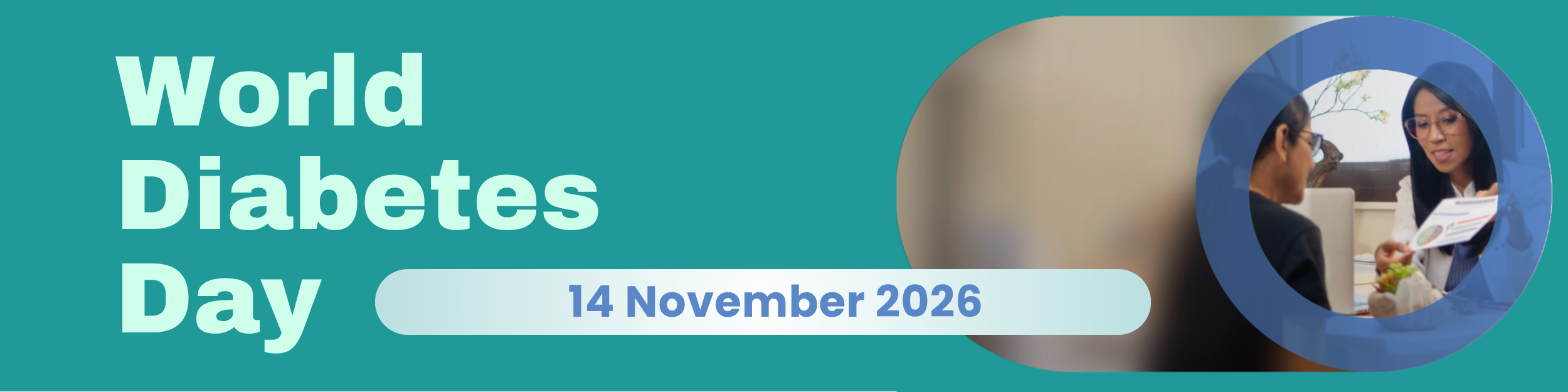
World Diabetes Day 2026
EARLY ACTION ON DIABETES | 14 NOVEMBER 2026
World Diabetes Day, held each year on 14 November, is a global awareness campaign led by the International Diabetes Federation (IDF). The theme for World Diabetes Day 2026–27 is "Early Action on Diabetes", with this year's focus on early diagnosis and risk reduction.
Diabetes is one of the world's fastest-growing health challenges, making early action critical for improving health outcomes and reducing the long-term impact of the disease.
- 1 in 9 adults worldwide are currently living with diabetes.
- The number of people living with diabetes is projected to reach 853 million by 2050.
- Early action helps people access care sooner, reduce their risk of developing diabetes, and improve long-term health outcomes.
Why Early Action Matters
Type 2 diabetes often develops without obvious symptoms, meaning that for many people the first sign of the condition is a complication. Increasing early detection, providing uninterrupted care, and supporting risk reduction can save lives while reducing long-term healthcare costs.
- Up to 50% of people with type 2 diabetes already have complications at the time of diagnosis.
- An estimated 635 million adults worldwide are at high risk of developing type 2 diabetes.
- Earlier diagnosis supports timely treatment before complications develop.
Supporting Healthcare Professionals in Early Detection
Healthcare professionals play a vital role in identifying diabetes and pre-diabetes earlier through routine screening, risk assessment, and timely follow-up. Access to reliable monitoring equipment, screening tools, and educational resources helps support accurate diagnosis and effective long-term management.
- Routine screening helps identify diabetes before complications occur.
- Risk assessment supports earlier intervention for people at increased risk.
- Timely follow-up improves ongoing diabetes management.
- Early recognition of type 1 diabetes is essential to help prevent diabetic ketoacidosis (DKA).
Understanding Diabetes
Diabetes Mellitus is a long-term condition characterised by elevated blood glucose levels due to the body's inability to produce enough insulin or effectively use it. Insulin is a hormone produced by the pancreas that plays a key role in regulating blood sugar levels.
The primary types of diabetes include:
- Type 1 Diabetes: An autoimmune condition where insulin-producing cells are destroyed.
- Type 2 Diabetes: A progressive condition involving insulin resistance or reduced insulin production.
- Gestational Diabetes: Develops during pregnancy and may increase the risk of type 2 diabetes later in life.
- Pre-diabetes: Blood glucose levels are higher than normal but not yet within the diabetic range.
EBOS Healthcare Australia: Supporting World Diabetes Day
At EBOS Healthcare Australia, we are proud to support World Diabetes Day and the call to #ActEarlyOnDiabetes. We are committed to supporting healthcare professionals in delivering high-quality care with an extensive range of products and resources designed to assist with screening, monitoring, and ongoing diabetes management.
- Supporting early screening and risk assessment.
- Providing reliable monitoring solutions for healthcare professionals.
- Supporting ongoing diabetes management through quality healthcare products.
Individuals who are concerned about their risk are encouraged to take the IDF's Type 2 Diabetes Risk Test at worlddiabetesday.org and consult a healthcare professional. Early detection and appropriate management can significantly reduce the risk of long-term complications and support improved health outcomes.
